
Step 1: The Entry Point launches each new IEYC unit of learning and should be planned to enable children to explore new experiences in exciting and memorable ways. Each IEYC unit of learning has a suggested Entry Point idea that can be adapted according to children’s developmental needs and the opportunities that exist inside and outside of the setting. The IEYC encourages teachers to be creative and use their own ideas to enhance Entry Point ideas, if they wish to do so. Teachers should consider how resources, the environment, and expertise available to them can be utilised to maximise the Entry Point; making it as exciting, interesting and relevant as possible. Each Entry Point should be planned in a way that makes it possible for teachers to observe and talk to children about what they are particularly curious to explore and learn about. The outcome of the Entry Point should be enthusiasm, emotional engagement and motivation, leaving children with an eagerness to explore and learn more about the new IEYC unit of learning.
Step 2: Capturing Curiosity at the initial stage of IEYC implementation helps strengthen opportunities for child-initiated and personalised learning, which can be further developed over time. Capturing Curiosity involves teachers observing, listening, questioning and re ecting on what children are interested in. Capturing a picture of what children are
curious to explore and learn about is essential to planning a learning environment that enables children to engage, play, explore and extend interests, resulting in deep learning and progression. Whilst Capturing Curiosity has a signi cant purpose at the launch of an IEYC unit of learning, the process should become an ongoing part of implementation, feeding
into teachers’ planning and becoming central to re ective practices. The IEYC suggests that teachers keep records of child-initiated learning experiences and where possible link them to the IEYC Learning Strands. In this way an accurate picture of all learning and development can be gained.
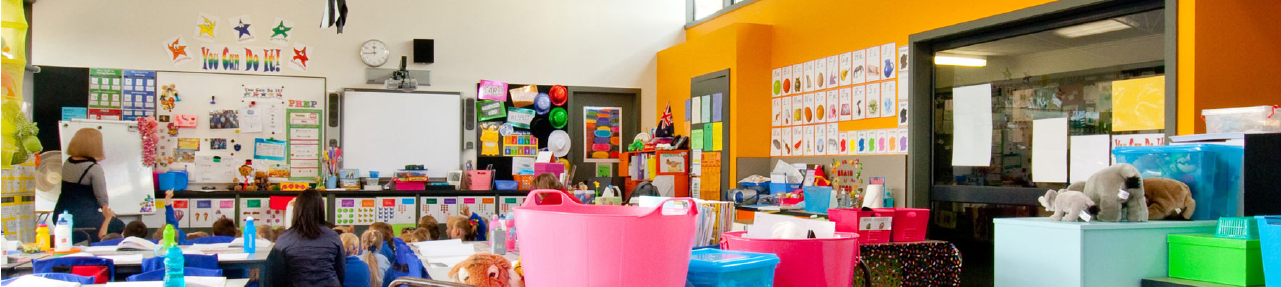
Step 3: Enable the Environment can only be fully achieved when teachers are aware of what children are curious to learn about and the ways in which they enjoy approaching learning experiences. It is important that teachers make best use of available space and develop stimulating learning areas so that they support and deepen children’s enquiry. Teachers’ reflective practices are key to enabling the environment. An environment that is enabled for learning is one where children feel safe to explore, providing opportunities for social, emotional and personal development to take place. An enabled environment is not static; it is developed over time by responding to each child’s learning journey as an IEYC unit of learning progresses. The IEYC believes that to fully Enable the Environment teachers need to be action researchers, gathering evidence of what children are curious about, the learning experiences children engage in, and the provision that will further support learning.
During the initial stages of Enable the Environment, teachers will need to consider:
■ children can play, explore and learn in safety
■ children learn at a pace which is unique to them
■ social, emotional and personal development ourishes
■ learning spaces evolve and are shaped over time, they do not become static ■ there is an ongoing response to children’s interests and needs
■ the best use of indoor and outdoor spaces is considered
Step 4: The Big Picture provides children and the home with an overview of an IEYC unit of learning. It prepares children for new learning experiences, while at the same time helps establish connections with previous learning. The Big Picture also provides further opportunities for Capturing Curiosity.
IEYC ‘Home Letters’ are provided in each IEYC unit to share with families, summarising the learning experiences that children will have. The letters are easily adapted, allowing for setting specific information to be added. Home Letters should be circulated well in advance of launching an IEYC unit of learning in order to maximise the opportunities for forming learning-link partnerships.
Step 5: Explore and Express provides children with opportunities to engage in Phase Level IEYC learning activities that have been holistically designed around the Learning Strands. Each IEYC learning activity is intended to present opportunities for child-initiated enquiry. After exploring an IEYC learning activity, children are encouraged to ‘express’ what they have experienced and learned about. The IEYC suggests ways in which children may like to express their ideas, however children may have their own ideas about how they would like to express their learning.


